Number puzzles
Puzzles where you place digits by logic: every row, cage, run or region has a rule, and one careful deduction leads to the next. Sudoku is the place to start; Kakuro, Calcudoku and Killer Sudoku add arithmetic, and the newer puzzles each add one twist.
Where to start
New to these? Begin with Shape Sudoku, Sudoku or Number Blocks — the gentlest rules here — then work along the list. Every puzzle has easy levels and a guide.
All 19 number puzzles
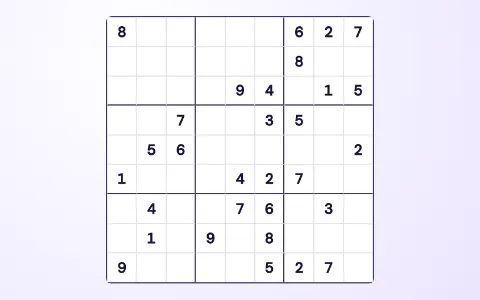
Sudoku
Fill the grid so every row, column and box contains each digit exactly once.
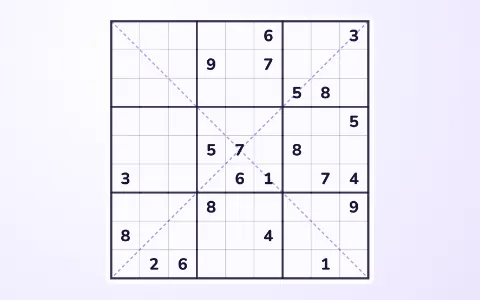
Sudoku Variants
X, Windoku, Jigsaw, Kropki, XV, Anti-Knight, Anti-King, Non-Consecutive, Even–Odd, Thermo, Sandwich, Arrow, Little Killer, Consecutive and Whisper lines — with notes, hints and a step-by-step solver.
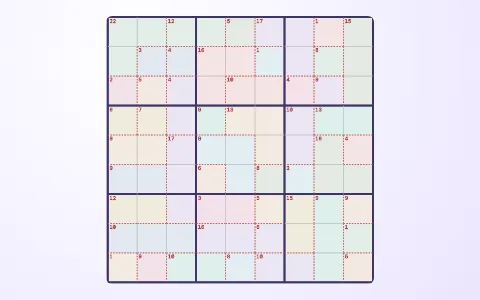
Killer Sudoku
Sudoku rules plus cages: the digits in each dotted cage add up to its total and never repeat.
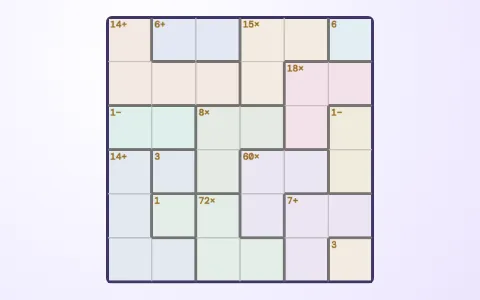
Calcudoku
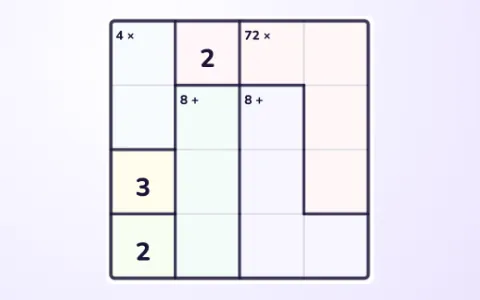
Fill an N×N grid with 1 to N — no repeats in a row or column — so every cage hits its target using its operation.
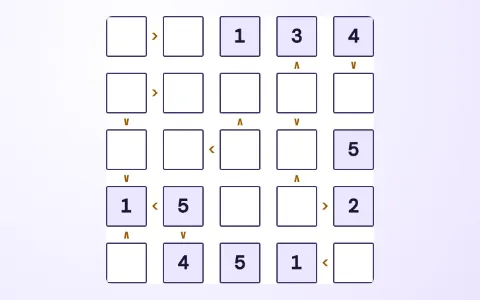
Futoshiki
Fill a Latin square so each row and column holds 1 to N once, and every inequality sign is true.
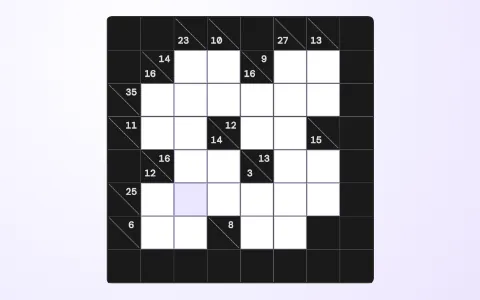
Kakuro
A crossword with digits: each run of white cells adds up to its clue, using 1–9 without repeats.
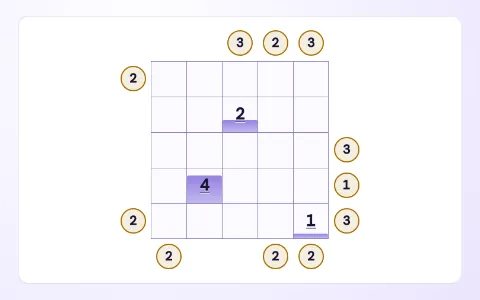
Skyscrapers
Fill the grid with towers so every row and column holds each height once — and the edge clues count how many towers you can see.
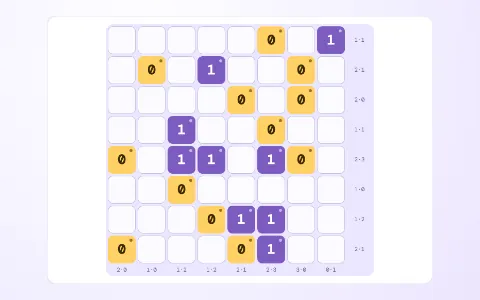
Binary Puzzle
Fill the grid with 0s and 1s: never three the same in a row, half of each in every line, and no two rows or columns alike.
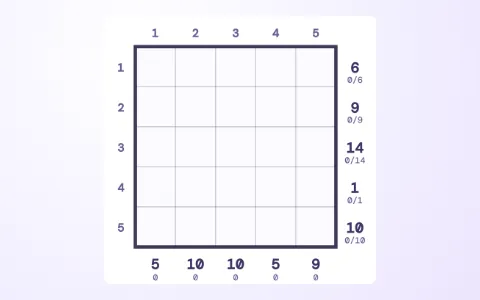
Kakurasu
Each shaded square counts its column number in its row and its row number in its column. Make every total add up — addition practice disguised as logic.
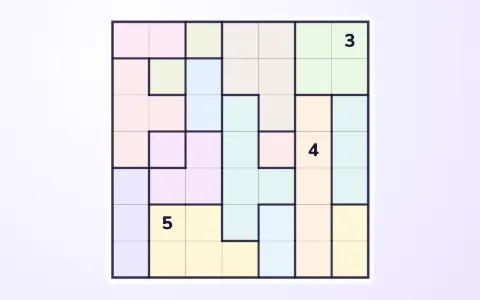
Number Blocks
Fill each block with 1 up to its size. The same number never touches itself — even diagonally. Simple rules, satisfying logic.
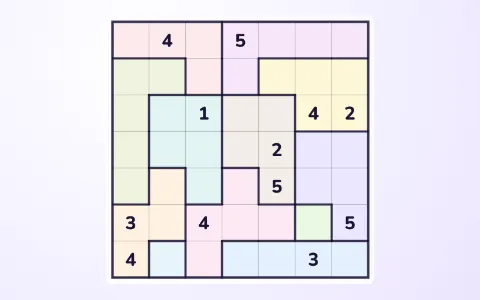
Number Regions
Fill in numbers so each joined group of equal numbers is exactly that big. Drag to copy numbers and watch the regions click into place.
Ripple Rooms
Each room holds 1 to its size. Equal numbers in a row or column must be at least that far apart — big numbers make big ripples.
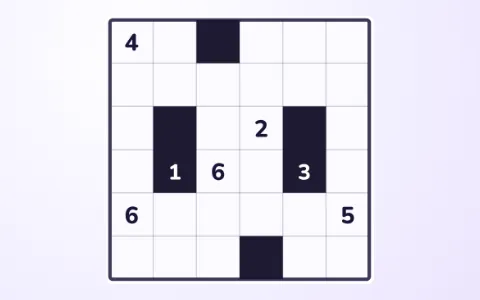
Straights
Fill the white squares so no number repeats and every run of white squares is a set of consecutive numbers.
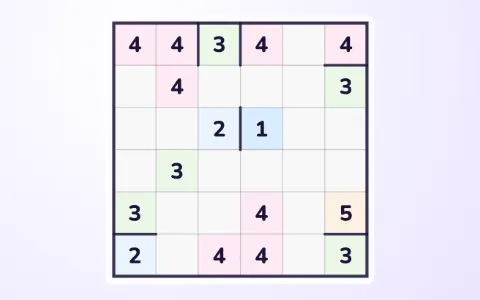
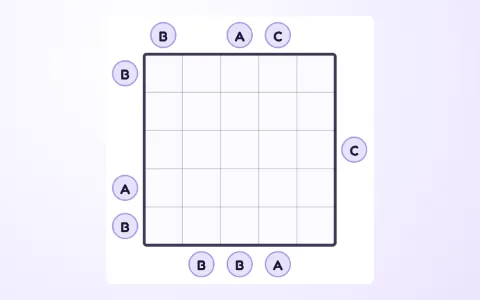
Edge Letters
Place each letter once per row and column; blanks fill the rest. Edge letters show the first letter seen from that side.
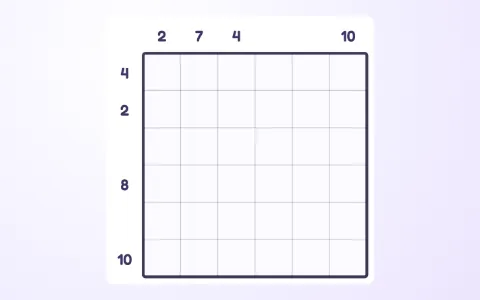
Between Sums
Two shaded squares per line, 1 to N−2 in the rest; outside sums count what lies between.
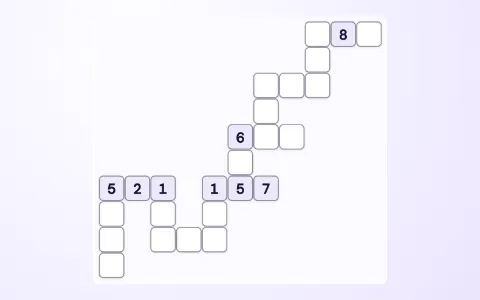
Number Crossword
A crossword with no clues — place every listed number so the digits match wherever across and down numbers cross.
Shape Sudoku
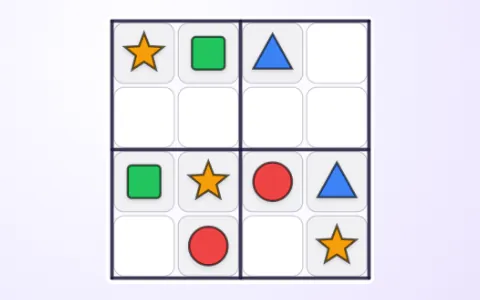
Sudoku with shapes for beginners: every row, column and box has each shape once.
Dot Sudoku
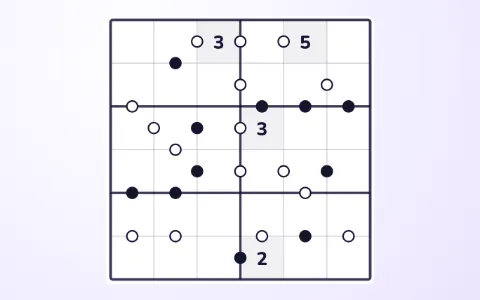
Sudoku with dots: white for consecutive numbers, black for doubles, and no dot for neither.
Flexi Cages
Cage puzzles with any set of numbers: fractions, primes, negatives, decimals — even letters.
Questions
Which number puzzle should I start with?
Sudoku at 4×4 or 6×6 — it uses only logic, no arithmetic. When it feels easy, try Futoshiki or Skyscrapers, then Kakuro or Calcudoku, which add sums.
Do I need to be good at maths?
Not for Sudoku, Futoshiki, Skyscrapers or the Binary Puzzle — the digits are only symbols. Kakuro, Calcudoku and Killer Sudoku use addition (and Calcudoku all four operations).
Everything else: all puzzles A–Z · how to play every puzzle · maths puzzles for kids · puzzles for the classroom.